More enquiries, even after hours
The problem
Enquiries often come in the evening or at the weekend, when your practice is closed. If no one replies, people looking for a physiotherapist move on to other professionals and you lose already interested leads.
The solution
IKIbrain stays active after hours too, replies to visitors and collects names and contact details, so your practice can call back anyone who needs an assessment and avoid leaving enquiries unanswered.
It’s 9:40 p.m. on a Tuesday. Someone who has been living with shoulder pain for weeks is searching on their phone for a physiotherapist who can help them feel better. They want to know whether your practice treats neck pain, whether you work on postural issues, whether you see patients by appointment, and how they can leave their contact details to be called back.
If they can’t find the information they need on your website and no one answers their questions (often they only find a phone number to call the next day), they usually don’t wait. They move on to the next professional’s website. Not because your work isn’t right for their problem, but because they wanted an answer straight away and couldn’t find it on your site.
This is where an AI assistant like IKIbrain can make a real operational difference: it stays on your website, replies to visitors 24/7 with the real information from your practice, and collects the contact details of people who want an assessment. In this guide, we explain how a virtual assistant for Physiotherapists fits into the day-to-day running of a practice and which questions it can handle.
Instant replies, even while you’re with a patient
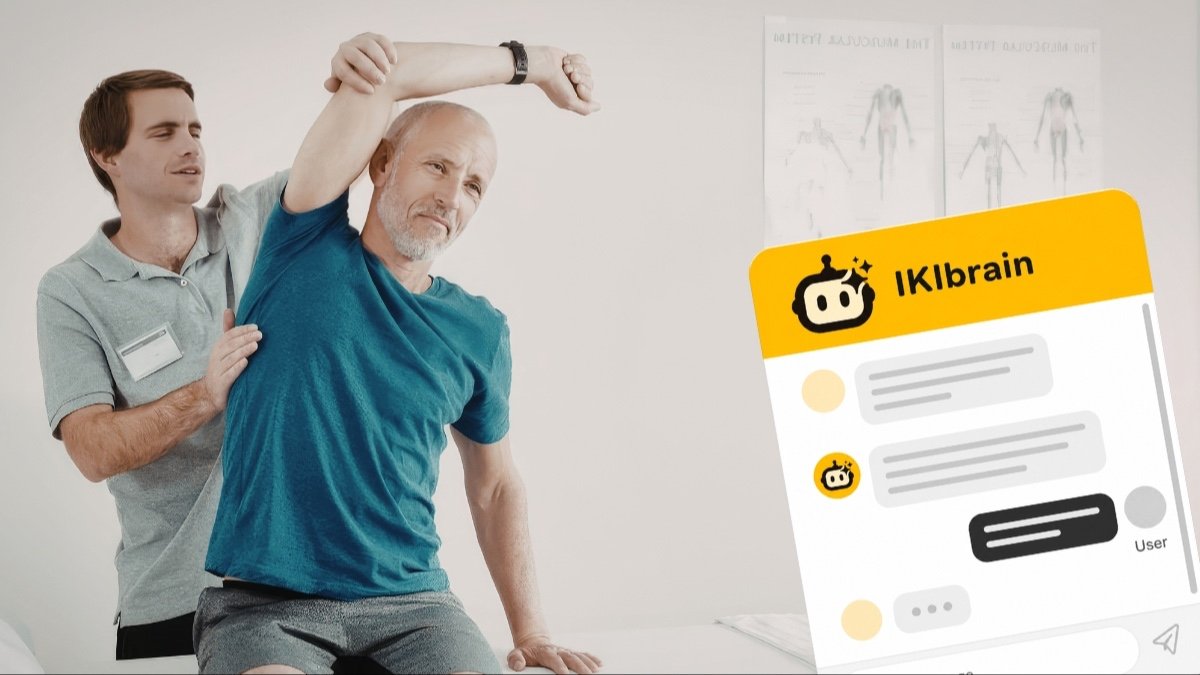
Anyone working in physiotherapy knows the issue isn’t just evenings or weekends. Enquiries also come in while you’re treating a patient on the table, during a manual therapy session, between strengthening exercises and a functional assessment. At those moments, you can’t stop to answer the phone or every message that comes in.
A AI chatbot for Physiotherapists added to your website helps exactly here: it handles the most common questions while you work. For example, it can explain whether you treat lower back pain, post-operative recovery, sports rehabilitation or musculoskeletal conditions, whether you see patients at the practice, and what information is useful to leave for an initial callback.
It doesn’t replace the clinical assessment, which remains yours, but it does a very practical job of automated customer support: it doesn’t leave the visitor on their own at the moment they’re deciding whether to trust you. For many practices, that’s the real point: not losing qualified enquiries just because they arrive at the wrong time of day.
Your practice website becomes more useful for people with a real need
People searching for a physiotherapist online rarely browse out of curiosity. They usually have a specific problem: knee pain after running, back pain that gets worse when sitting, neck stiffness, recovery after an injury, or questions about how the first appointment works. If the website doesn’t guide that search well, visitors won’t dig deeper.
A well-configured virtual assistant turns your website into a clearer, more guided experience. Instead of forcing people to search through pages, menus and PDFs, it lets them ask a direct question in their own words. That’s especially helpful for people who aren’t familiar with technical language and want to know right away whether your practice can help them.
With IKIbrain, you can set the tone of voice, rules and content so they match the way you work. If your approach is reassuring, straightforward and professional, the digital assistant responds in the same style. And you don’t have to deal with the technical side: we take care of everything, from the snippet integration to content setup. If you want to learn more about how it works, you can take a closer look at how the assistant works.
Patients’ typical questions get a clear first answer
In day-to-day practice, many of the enquiries that reach your clinic are similar. They’re not diagnoses to be made in chat, but preliminary questions that help people understand what to do next: what kinds of issues you treat, whether they need to bring scans or reports, where the practice is located, how to leave a request, and which contact channels are available.
An AI-powered conversational assistant can handle this initial stage well, easing the workload for reception or the practice owner. Instead of repeating the same information by phone every day, you have support that delivers it in a clear, consistent way, even when a visitor lands on your website at 7 a.m. or 11 p.m.
Here’s a realistic example of a conversation on a physiotherapy website:
“Good evening, I’ve had lower back pain for a few days and I’d like to know whether your practice treats this kind of issue. If possible, I’d like to be contacted tomorrow, but after 6 p.m.”
“Good evening, our practice treats musculoskeletal conditions, including back pain. If you’d like, you can leave me your name and phone number: I’ll forward your request so the practice can get back to you in the time window you indicated.”
That’s the key point: the AI assistant provides information and collects the contact details. It doesn’t give clinical opinions, it doesn’t replace professional assessment, and it doesn’t make up answers when something isn’t in your practice’s content.
RAG technology prevents made-up answers about treatments and services
When it comes to health, accuracy matters more than flash. That’s why IKIbrain uses RAG technology (Retrieval-Augmented Generation): in practice, the assistant only answers based on the real content you provide. It can draw from your website pages, FAQs, PDF documents, Word files, PowerPoint presentations, CSV files or text you prepare to describe services, approach and useful information.
If your website explains that you offer orthopedic rehabilitation, manual therapy, functional recovery or postural exercises, the assistant uses that information. If someone asks something that isn’t in the knowledge base, it says so openly and invites them to contact the practice directly. It doesn’t invent, doesn’t fill in the gaps by guesswork and doesn’t risk promising something you don’t offer. It doesn’t diagnose and it doesn’t make up therapies.
For a physiotherapy practice, that’s a real advantage. It means keeping control over what’s communicated online, avoiding misunderstandings about treatments or how you work, and offering a more reliable digital presence. If you update a page on your website or add new content, you only need to update the knowledge base and the assistant adapts.
If you want a quick overview of what you can configure, you’ll find a summary in the assistant features.
Qualified lead capture, without promising what doesn’t depend on the assistant
One of the most common questions is this: does a system like this really book appointments? The honest answer is simple. In the standard setup, no: IKIbrain does not book visits or schedule appointments on its own. Its job is to collect the potential patient’s request and contact details, so you or your practice can call them back to confirm availability, timing and how the first assessment works.
For many physiotherapists, that’s already a very concrete help, because it prevents you from losing the initial contact. The person submits the request at the moment they feel the need, and you receive it already organised with the essential information to get back to them calmly.
If you want, the chatbot can also handle bookings directly (without human intervention), but this depends on the configuration: for that level of automation, the system must be connected to your digital calendar and sync with it, and this kind of setup has to be assessed case by case.
A light solution to activate and easy to update
Many professionals put this kind of project off because they fear technical complications, long timelines or constant changes to the website. In reality, integration is done with a simple code snippet and is compatible with WordPress and any other platform. For you, that means not having to rebuild your website from scratch.
The practical value also lies in the fact that the IKIbrain team handles the setup. Visual appearance, tone of voice, assistant personality, behaviour rules: everything is configured to match your practice. If you work with Italian patients but also receive enquiries from people who prefer to write in another language, the assistant can understand and reply in multiple languages, even if it starts from content created in Italian.
If you update your services, change your opening hours, add a new page to your website or upload patient information materials, you only need to update the knowledge base so the assistant can keep replying in a consistent, up-to-date way.
A constant presence that protects your clinical time
In physiotherapy, time has a double value: it’s time spent with the patient and time taken away from admin work. A well-configured AI assistant doesn’t replace the professional relationship, but it helps you protect it. Fewer interruptions while you work, fewer unanswered enquiries, and more continuity in welcoming people who arrive on your website with a real need.
That’s the main benefit of an artificial intelligence solution for Physiotherapists: keeping a listening channel open after hours too, with replies that stay aligned with your practice and a clear handoff to human intervention when it’s truly needed.